
Winning the trust war
A strategic teardown of how Upfront built its brand by hiding nothing.

In an era where consumer trust is at an all-time low a Dutch nutrition brand isn’t just surviving, it’s thriving. Upfront has built a fiercely loyal community, not with massive ad spends, but with a relentless commitment to a single idea: radical honesty. Their success is no accident. It’s a masterclass in brand coherence.
But how do they do it? To deconstruct their success, we’ll analyze their approach through our Digital Brand Experience Model (DBEM). This model acts as a flywheel, orchestrating four key systems to build a coherent brand:
Foundation (The ‘Why’): Codifying the core purpose and linking business goals to brand strategy.
Audience & Market (The ‘Who’): Building a deep understanding of audiences to answer their needs definitively.
Expression & Design (The ‘How it Feels’): Defining a consistent personality and character for every channel.
Activation & Evolution (The ‘What & How’): Orchestrating products and content to deliberately move toward set goals.
By examining Upfront through these four pillars, we can see how they turned a simple value into a multi-channel digital powerhouse.
1. The digital “Truth Hub”
A brand’s foundation is its ‘why’ translated into digital form. Upfront promise is to deliver “no nonsense” nutrition, and its entire digital infrastructure is built to prove it.
The manifesto as strategy
Their website features “Het plan” (The Plan), a bold, multi-decade vision to vertically integrate and eliminate the “clusterfuck of crooked interests” in the food industry. This isn’t a buried mission statement; it’s a public declaration of war against industry opacity.
The educational product page
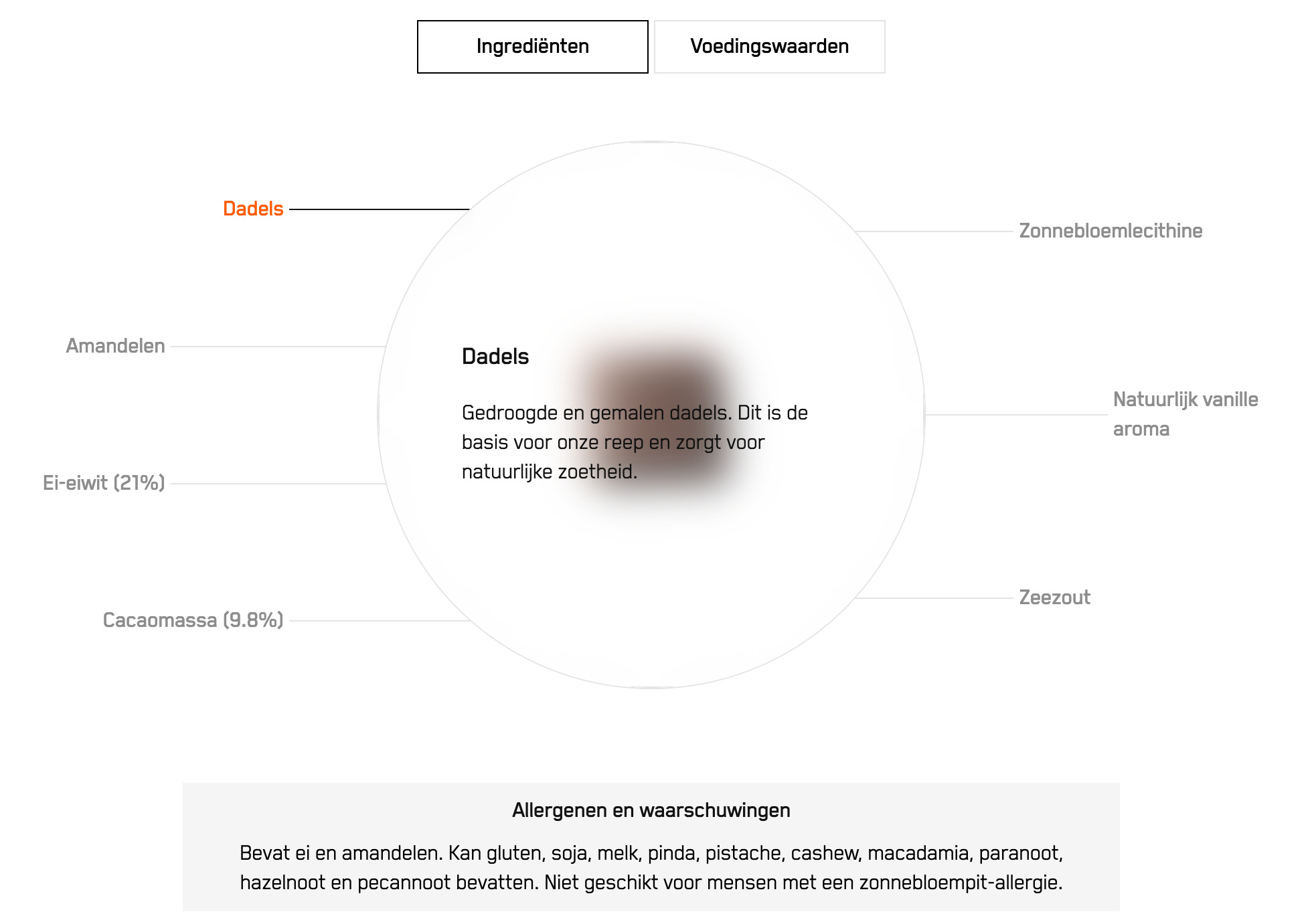
Product pages are not sales tools; they are educational resources. For their protein bars, they explain the function of ingredients like dates: “This is the basis for our bar and provides natural sweetness.” This transforms a transaction into a moment of empowerment.
Design as a value
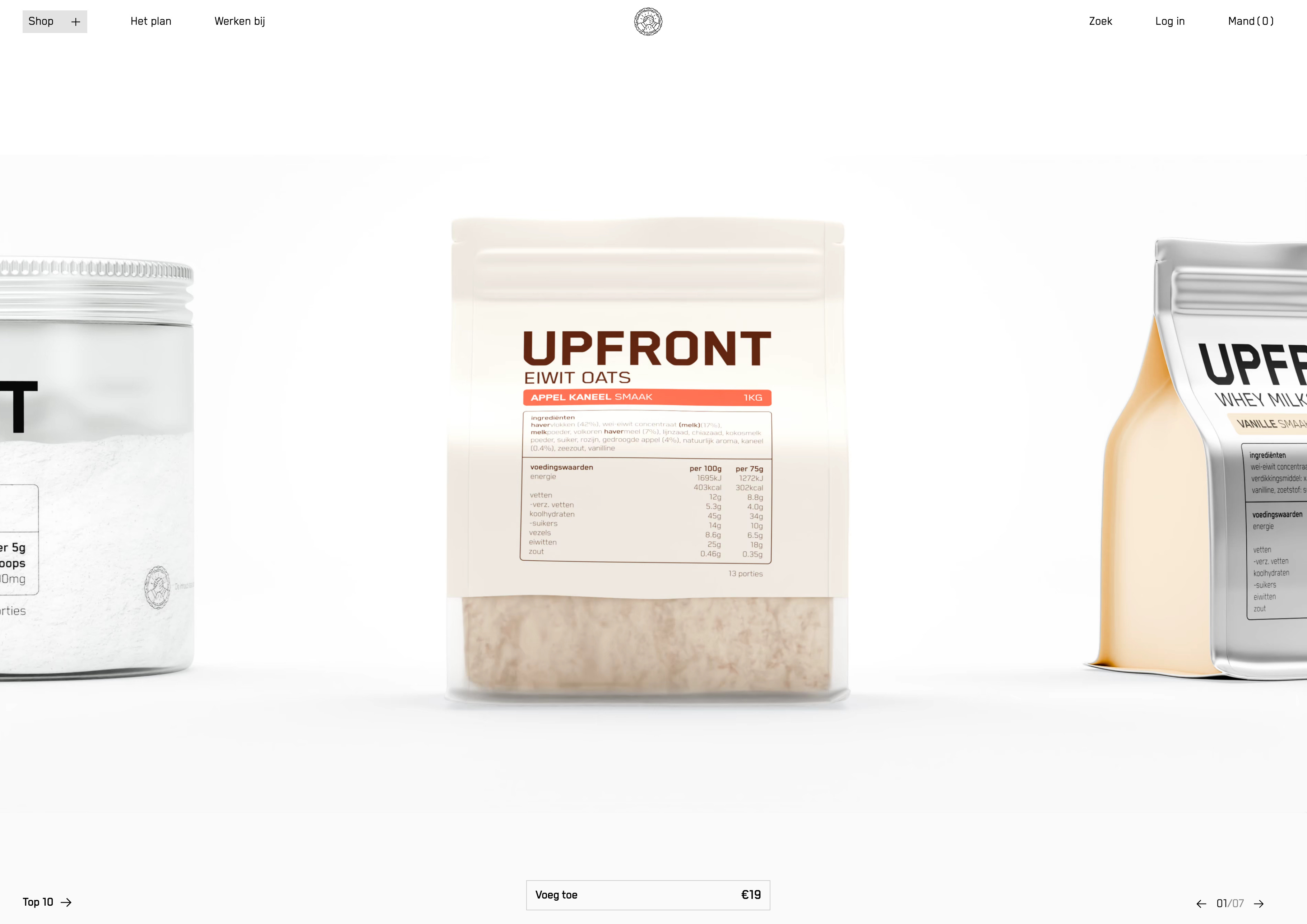
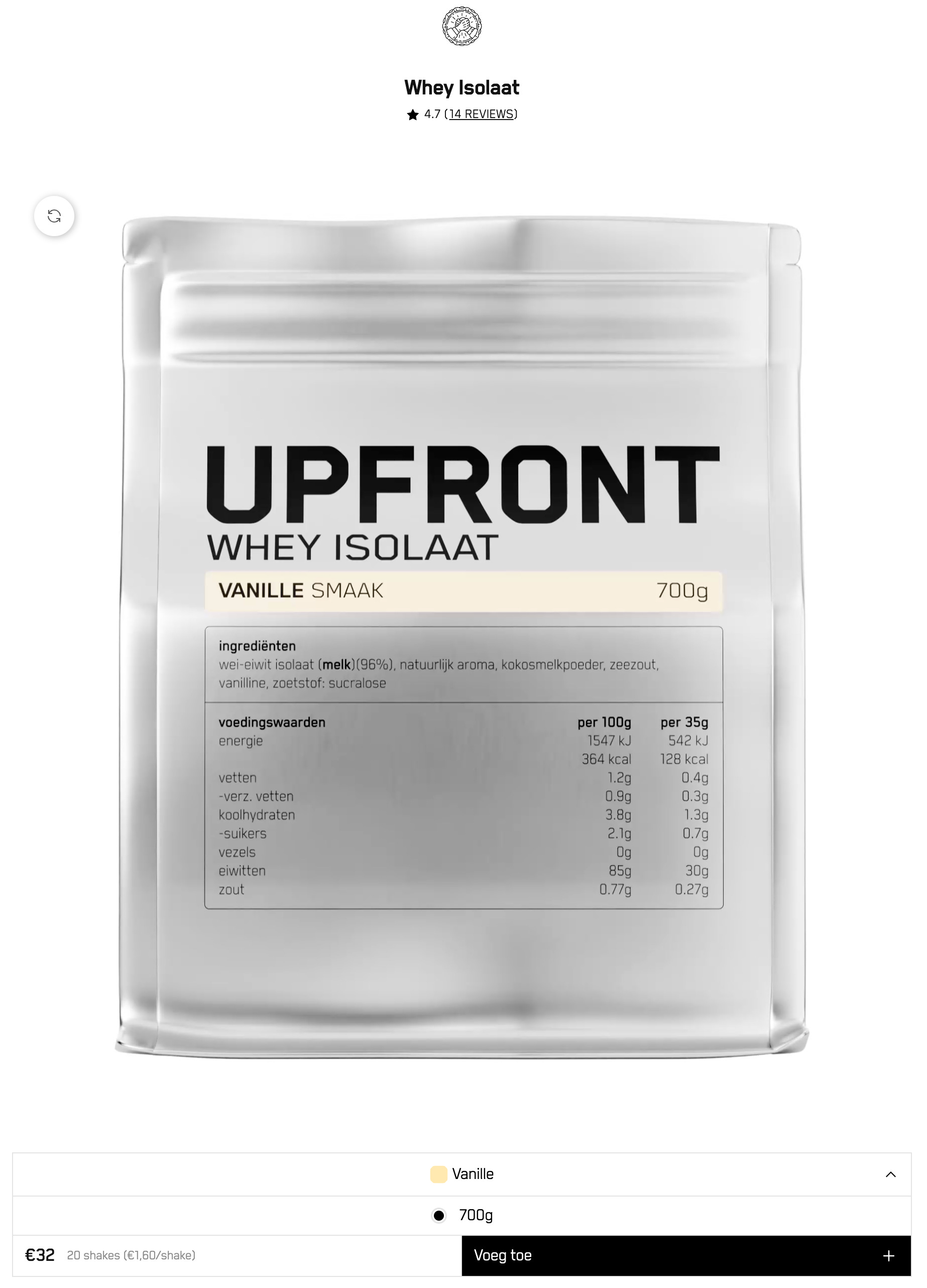
The website’s clean, frictionless UX (free of pop-ups and dark pattern) mirrors their famous packaging, where the full nutritional table is placed on the front. The design itself is a proof point of their “nothing to hide” ethos.
2. Arming the skeptical consumer
Upfront deeply understands that their audience isn’t just health-conscious; they’re educated, skeptical, and tired of being misled. Their digital content strategy is designed to be the antidote.
Content as advocacy
Their Instagram (@upfront.official) and TikTok (@upfront.nl) feeds are dedicated to educating consumers on how to spot deceptive industry practices. This positions them not as a seller, but as a trusted ally.
Voice of the customer as proof
The ultimate proof of their strategy’s success is seeing their core message echoed back by the community. A clear example can be found on their Trustpilot page, where hundreds of reviews have earned them an “Excellent” rating. A recurring theme in the feedback is a deep appreciation for the brand’s transparency, with reviewers frequently using phrases like “honest communication,” “no marketing tricks,” and “quality ingredients.” This unsolicited validation from a large-scale public platform demonstrates that Upfront’s core value of “no nonsense” has been successfully received, understood, and championed by the very audience it aims to serve.
Differentiation through education
Upfront masterfully attacks the practices of the industry, the “nonsense claims” and “fine print.” This elevates their brand from a market player to an industry reformer.
3. The “no bullshit” voice
A coherent brand feels the same everywhere. Upfront’s direct, confident, and mission-driven personality is executed with disciplined consistency across every channel.
A ruthlessly consistent voice
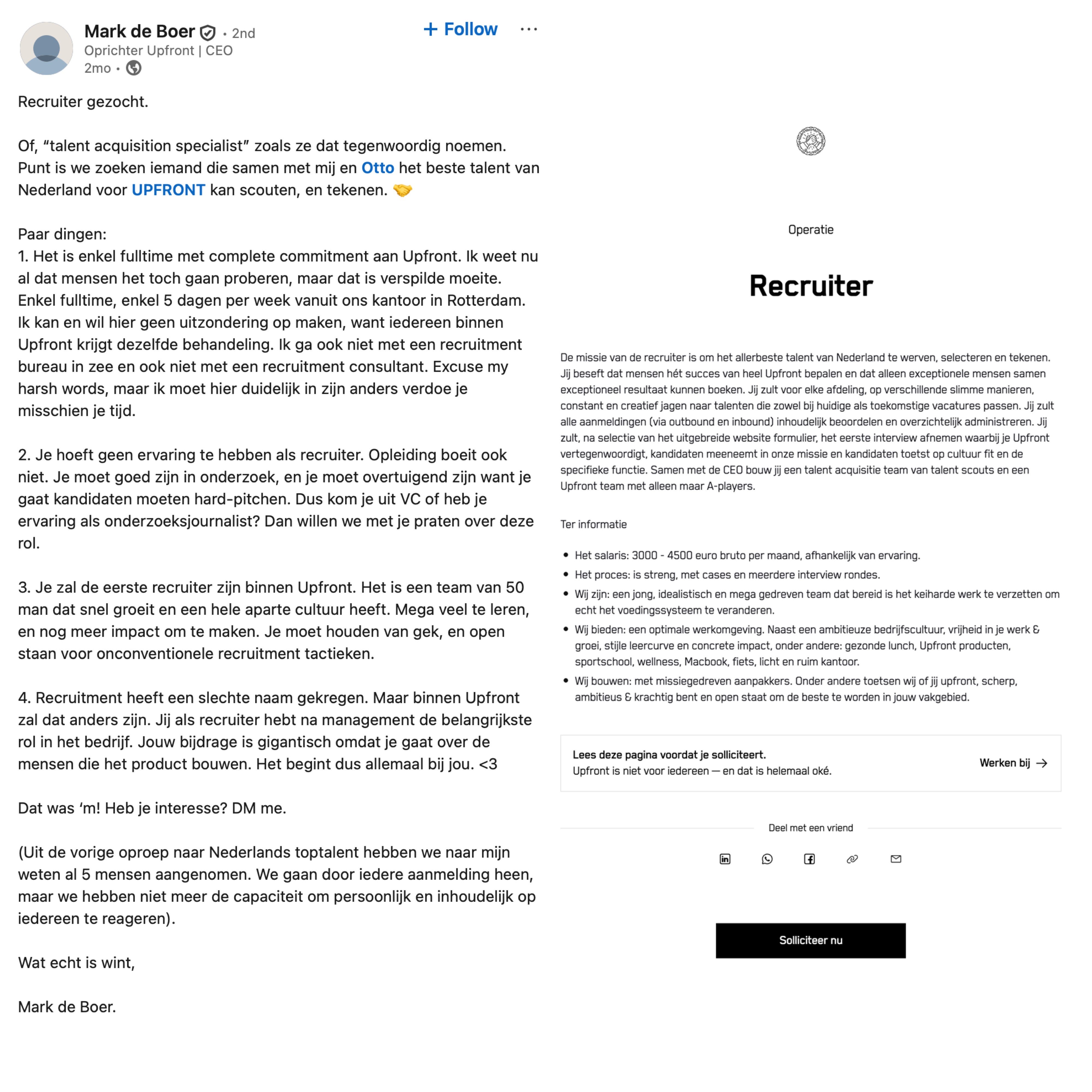
The confrontational tone of their website is the same candid voice founder Mark de Boer uses on LinkedIn and in viral job posts that famously stated, “Education doesn’t matter.”
Visuals as a manifesto
Their minimalist design system with a simple sans-serif typeface, a restricted color palette, and clean product photography is a visual metaphor for the simplicity of their ingredients.
4. The community flywheel
Upfront uses digital channels not to broadcast, but to listen, co-create, and evolve, turning their community into a strategic asset.
The community feedback loop
From the start, co-founder Harro Schwencke personally sent Instagram DMs to the first 10k followers, establishing a culture of dialogue that transforms community management into a real-time R&D engine.
“You asked, we listened”
This is not just a slogan; it’s a core product development strategy. On Instagram the company explicitly turned its product roadmap over to its followers, asking: “What should we make next?” This open call for suggestions for their next product launch demonstrates a deep trust in their community, transforming them from passive consumers into active participants in the brand’s future. It’s the ultimate proof that their R&D is genuinely audience-led.
The high stakes of honesty
While Upfront strategy is undeniably effective, it is not without significant risks. The very principles that define the brand also create unique vulnerabilities.
The double-edged sword of transparency
The perils of a confrontational voice
A brand voice that is relentlessly direct and critical of an industry can be perceived by some as arrogant. While this resonates with their core audience, it can alienate mainstream consumers who are less invested in the “movement” and may find the approach off-putting.
The high cost of honesty
Committing to high-quality ingredients results in a premium price point, a significant barrier in a price-sensitive market. Online discussions frequently label their products as “expensive,” making them vulnerable to sharp criticism on value-for-money.
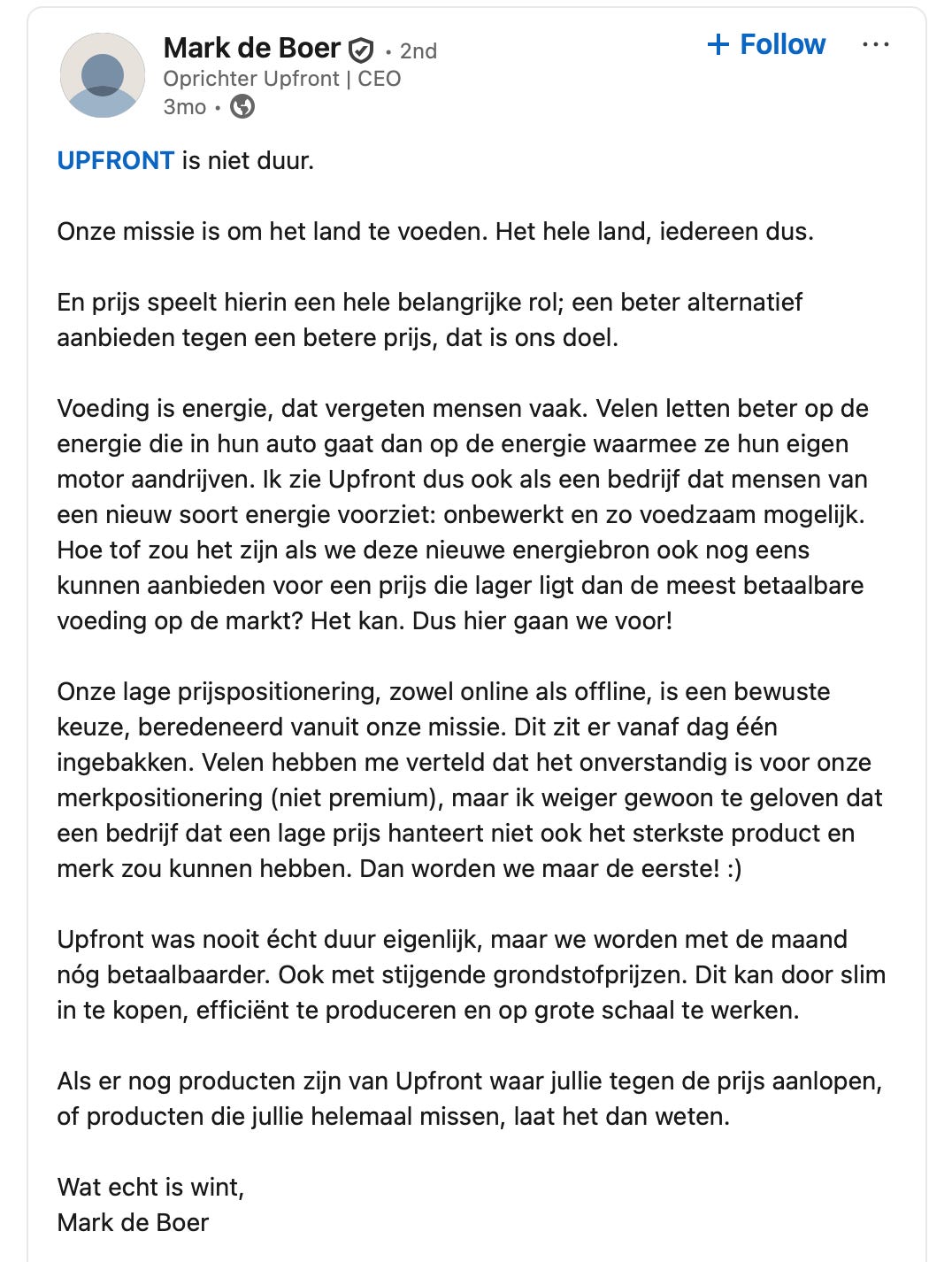
The operational hurdles of ambitious growth
Upfront’s long-term plan to vertically integrate is audacious. However, public failures like a costly, abandoned clothing line expose the operational risks of losing focus. Scaling their mission-driven team and navigating the “DTC scaling wall” will test the limits of their current model.
Conclusion: a high-stakes blueprint for a modern brand
Upfront provides a powerful blueprint for a modern digital powerhouse. Their success is built on a perfectly tuned digital flywheel powered by radical transparency, where each pillar of the Digital Brand Experience Model (DBEM) reinforces the others.
Their transparent Foundation builds trust with a skeptical Audience, who eagerly share their authentic Expression and actively co-create the brand’s Activation. This is more than “good social media”; it’s a deliberate, end-to-end digital strategy.
However, it’s also a high-stakes, high-pressure model. The brand’s greatest strength, its unwavering commitment to transparency, is also its greatest vulnerability. Upfront proves that while the most effective strategy in a skeptical world is the execution of a verifiable truth, it requires near-flawless execution to succeed. Their digital brand experience is not a function of the business, it is the business.